Knowledge Center
Security Resources
 Blog
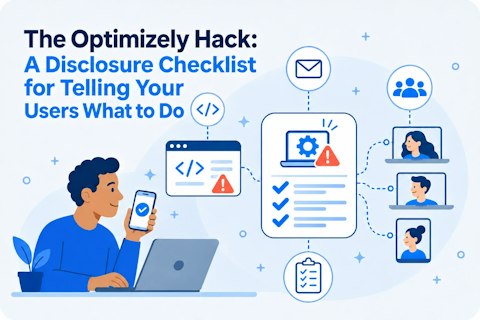
The Optimizely Hack: A Disclosure Checklist for Telling Your Users What to Do
On November 16, malicious code in Optimizely projects ran on several organizations' sites. If yours was one of them, your users need to hear from you. These checklists cover confirming exposure, writing the notice, what each group of users should do and the deadlines that apply.
Also Featured
 Blog
Java4Shell: A Pre-Auth RCE in Java's Base64 Decoder Puts Your APIs at Risk
Java4Shell (CVE-2026-114938) is a heap overflow in the Base64 decoder built into Java 17 and later. Researchers found it with AI in an hour and showed it can lead to remote code execution with no login. Fixed builds are out. Here is how to check your exposure, mitigate and patch.
Read Now Blog
Hardcoded Credentials in Mobile Apps: Every Key You Ship Is Already Public
Two consumer apps shipped working database passwords to millions of phones, two weeks apart. With AI reading decompiled code in seconds, and key permissions changing after release, treat every secret in a shipped app as already found.
Read NowAll Resources
All 60 resources
 Blog
API Misconfigurations Don’t Stay Fixed. Here Is How API Secure Catches Them.
Open endpoints, downgraded TLS, dropped security headers and access checks that always pass. API misconfigurations rarely make headlines as bugs, but they keep showing up in breaches. Here is how API Secure finds them before attackers do.
 Blog
PHP2Shell, Node2Shell and the Rise of AI-Augmented Cyber Attacks
PHP2Shell turned a two-year-old PHP weakness into remote code execution. Node2Shell, a Brotli bug hidden since 2018, was under active attack within two days of its patch. Both are early signs of AI-augmented cyber attacks.
 Blog
AI-Augmented Attacks: How Attackers Use AI to Chain Small Flaws
AI-augmented attacks are attacks where an adversary uses AI tools to do work that used to take skill and time: decompiling apps, reading obfuscated code, mapping APIs, writing exploit code and linking several minor weaknesses into one working attack path. The flaws are not new. The speed and scale are.
 Blog
What Is an AI AppSec Agent?
An AI AppSec agent is an AI assistant built into an application security platform that answers questions about your security data in plain language. Instead of filtering dashboards and exporting reports, you ask what to fix first, which apps are affected or what happened at runtime, and the agent answers from your own findings.
 Blog
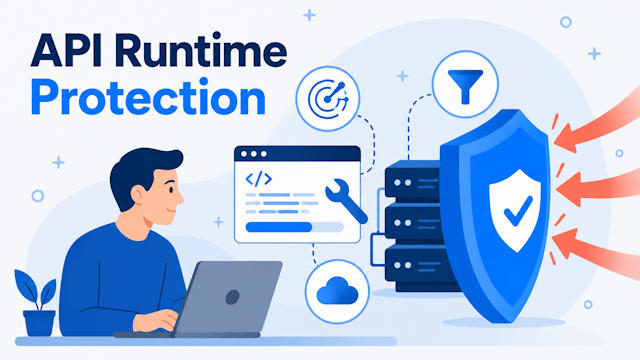
API Runtime Protection: Blocking Attacks While the Fix Ships
API runtime protection is security that watches live API traffic in production and stops attacks as they happen. It protects APIs during the time between a vulnerability being found and the fix being deployed, and against attacks on flaws nobody has found yet.
 Blog
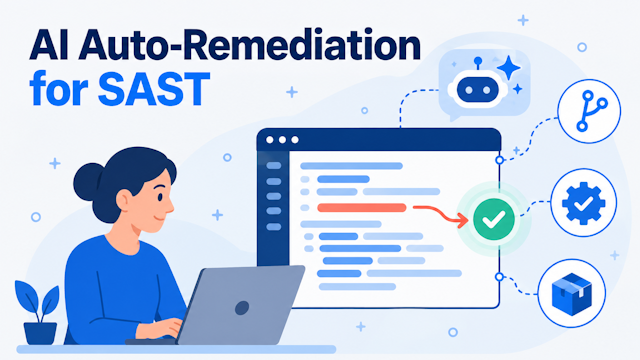
AI Auto-Remediation for SAST: From Finding to Merged Fix
AI auto-remediation is the use of AI to turn a security finding into a working code fix. For static application security testing (SAST) and software composition analysis (SCA), it means a developer, or their AI coding agent, receives the exact change needed to resolve a vulnerability, not just a description of the problem.
 Blog
Mobile Game Security: Stopping Cheats, Ad Bypass and Fake Players
Mobile game security protects a game, its players and its revenue on the devices where the game runs. It covers anti-cheat, anti-tampering, protection against ad and in-app purchase bypass, defense against cloned games, and detection of fake players and fraud that waste user acquisition spend.
 Blog
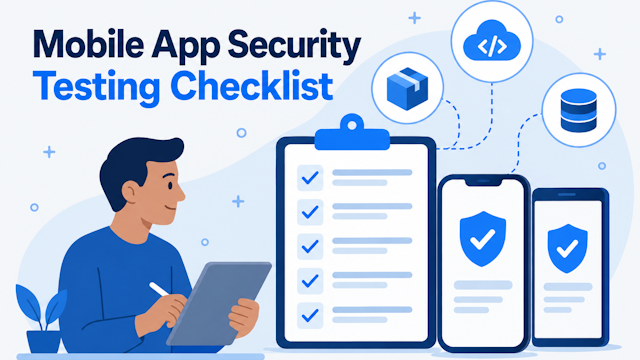
Mobile Application Security Testing for iOS and Android: A Checklist
Mobile application security testing checks an iOS or Android app for vulnerabilities and privacy issues before and after release. A complete program tests the app binary, the APIs it calls, the third-party SDKs inside it and the data it stores, on every release, and maps results to the OWASP Mobile Top 10.
 Blog
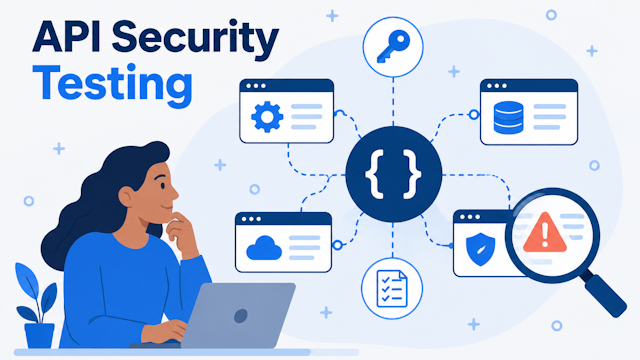
API Security Testing: How to Test APIs the Way Attackers Do
API security testing is the practice of probing APIs the way an attacker would, to find flaws such as broken authorization, data exposure and injection before someone exploits them. Effective API security testing runs authenticated, covers every API you have (including the ones nobody inventoried) and repeats every time an API changes.
 Blog
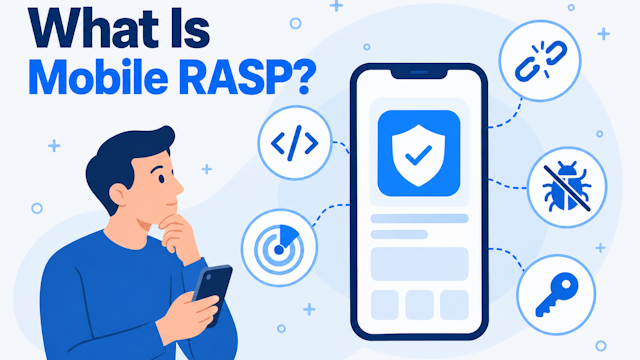
What Is Mobile RASP? Runtime Application Self-Protection Explained
Mobile RASP (runtime application self-protection) is security built into a mobile app that detects and stops attacks while the app runs on a user's device. It hardens the app against reverse engineering and tampering, checks the device it runs on, and reacts in real time, without waiting for a server or a security team.
 Blog
AppSec in the AI Era: Closing the Loop on AI-Driven Exploits
LLM-driven exploits now outpace human patching. Learn how Data Theorem’s closed-loop AI security platform discovers AI assets, fixes exploitable vulnerabilities automatically, and defends applications at runtime with AI Exploits, AI Auto-Remediation, and AI Active Protection.
 Data Sheet
Mobile Secure Data Sheet
Continuous mobile app security testing for iOS and Android, on every release. This two-page overview covers how Mobile Secure combines static, dynamic, and behavioral analysis on real devices with third-party SDK review, auto-triaged alerts to Slack, Teams, or email, and secure-code remediation that closes findings in days. Includes supported frameworks, compliance coverage (PCI DSS, HIPAA, GDPR, SOC 2, and more), and CI/CD integration details.