Why APIs Need Protection in Production
Testing finds API flaws before attackers do, but fixes still take time. A code change goes through tickets, reviews and releases. Meanwhile the vulnerable API is live and reachable. Attackers using AI tools can now find and exploit those flaws faster than most release cycles, which makes the exposure window the most dangerous part of the lifecycle.
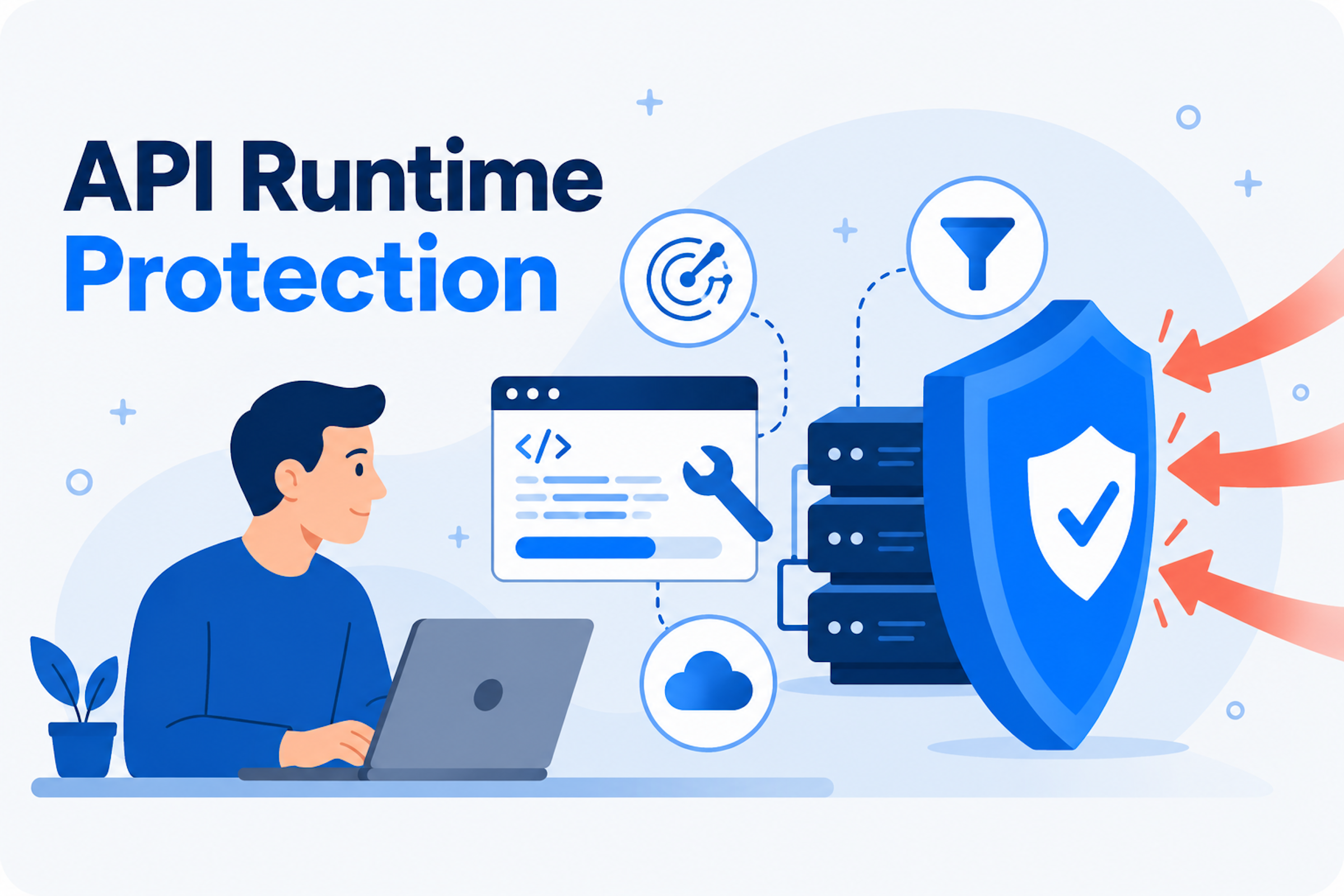
API runtime protection closes that window for the attacks it blocks: the flaw still exists in code, but the attack does not get through.
What API Runtime Protection Covers
- Attack detection on live traffic.Spotting exploitation attempts such as authorization abuse, injection and enumeration.
- Blocking.Stopping malicious requests before they reach the vulnerable logic.
- Context from testing.Knowing which APIs have open vulnerabilities, so protection focuses where it matters.
- Visibility.Showing which APIs are attacked, how often and how much was blocked.
- Coverage of shadow APIs.Protection only works on APIs you know about, so discovery matters here too.
API Runtime Protection vs. a WAF
A web application firewall (WAF) is good at blocking known attack patterns at the edge. On its own, it does not know which of your APIs are vulnerable, which endpoints exist, or what normal use of a specific API looks like. API runtime protection adds that API-level context. The two work best together: the API security platform knows what to block, and the WAF you already run enforces it.
Breaking the Exploit Chain
Most serious attacks chain several weaknesses. Blocking any single step breaks the whole chain. If testing has already mapped the chain, runtime protection can target the step that is easiest to block, while developers work on the full fix in code.
How Data Theorem Protects APIs at Runtime
Runtime protection is one of the four pillars of Data Theorem API Secure, alongside discovery, posture and security testing. API Protect, the runtime protection feature of API Secure:
- Uses what API Secure already knows from discovery and authenticated testing, including the exploit chains mapped by AI Exploits.
- Detects attacks on live APIs and tells your WAF what to block, so enforcement happens in the infrastructure you already run.
- Alerts when an API that was protected changes and starts leaking data.
- Shows attacks detected and blocked over time.
Together with Mobile Protect inside your mobile apps, this is AI Active Protection: a first line of defense that blocks AI-augmented attacks in front of your APIs and inside your apps while fixes ship.
API SecureDiscover, posture, security testing and runtime protection.Learn MoreRelated Data SheetAPI Secure Data SheetDiscover, harden, test, and protect every API across mobile, web, and cloud. API Secure is Data Theorem's full-lifecycle API security platform: it continuously inventories every REST, GraphQL, gRPC, SOAP, and serverless API, hardens posture across multi-cloud, attacks them with hacker-style testing, and defends against prompt injection, LLM abuse, and AI-augmented attacks at runtime. Download the datasheet to see how discovery, health, testing, and active protection come together in one platform.Read Now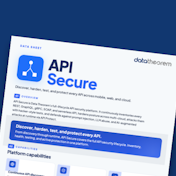
Frequently Asked Questions
What Is API Runtime Protection?
Security that detects and blocks attacks on live APIs in production.
Do I Still Need a WAF?
Yes. API runtime protection adds API-level context; your WAF enforces the blocks.
Does Runtime Protection Replace Fixing the Vulnerability?
No. It protects the API while the fix is built and deployed, then the fix removes the flaw for good.
What Is the Difference Between API Security Testing and API Runtime Protection?
Testing finds flaws before release or continuously as APIs change. Runtime protection stops attacks on live APIs in production.