A few months ago, I was at a mobile gaming conference in London where almost every conversation circled back to monetization, user acquisition costs, and how studios are trying to protect their revenue streams. Teams were talking about in-app purchase (IAP) optimization, the rise of hybrid monetization, and the increasing reliance on in-app advertising (IAA) as CPMs fluctuate.
Right after the event, I flew to Paris to meet a friend who works as an Android developer. We grabbed a workspace at a WeWork, and I started sharing everything I had heard in London about scaling revenue and how studios are trying to defend their apps from tampering.
He stopped me and said something that caught me completely off guard.
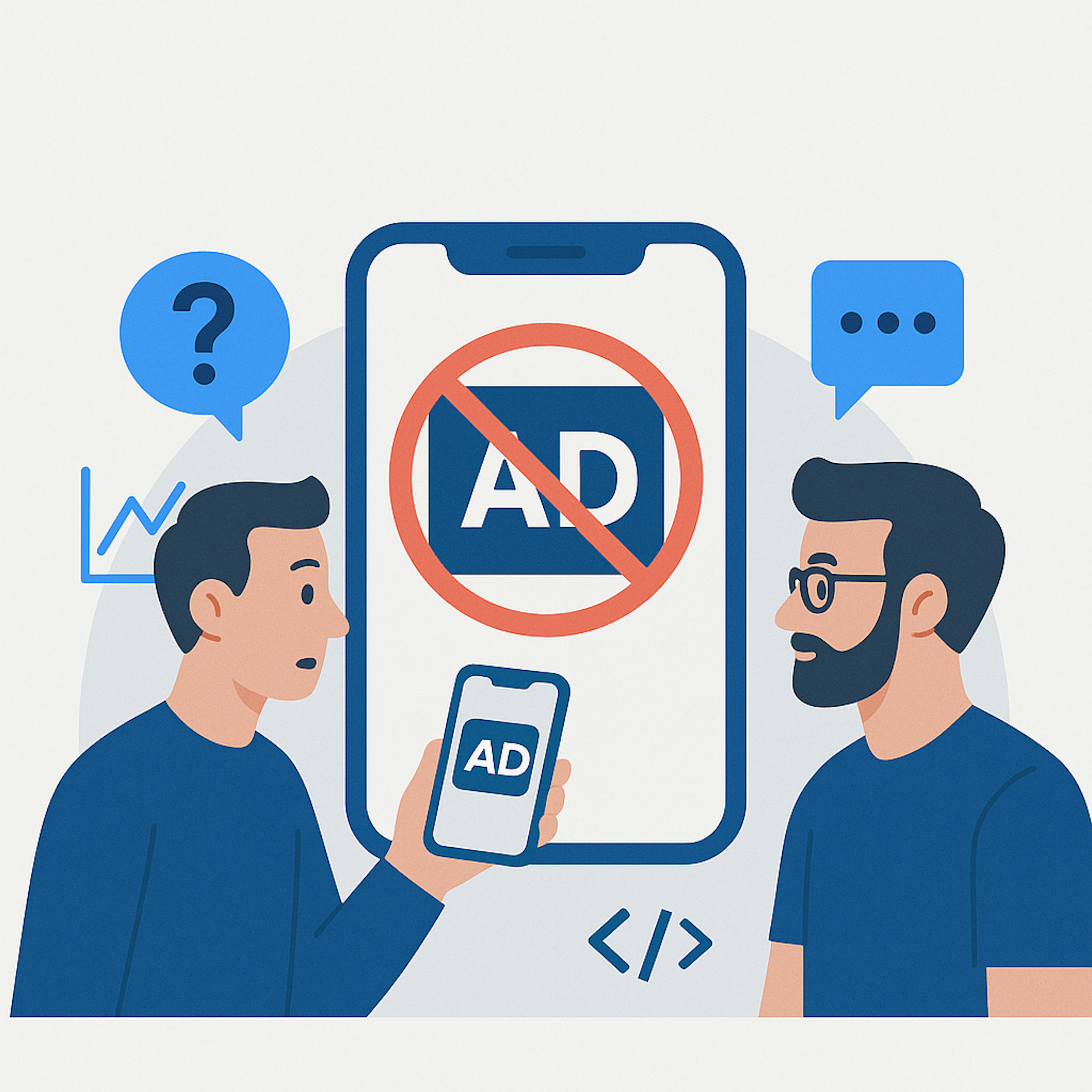
He told me how easy it is for him to remove ads from mobile games when he is testing apps on his own network. The steps were shockingly simple:
The Ad Removal Workflow
- Decompile the APK using apktool
- Locate the ad unit ID in the manifest or resource files
- Replace it with his own ID or a test ID that serves no ads
- Recompile the APK
- Resign the package using jarsigner
Then he added the line that stuck with me:
It is not a skilled hack. It is basic, but it works in a lot of cases.
And that is the problem. For any studio relying on IAA, it is basic and easy to do. One modified APK can spread through Discord, Telegram, and modding forums in minutes, wiping out ad revenue and creating a version of your game where monetization simply does not exist.
Why This Matters for Mobile Games in 2026
Most studios still rely on static obfuscation. Modders now use open source tools to break static protection without much effort. Once one person cracks your APK, the exploit works everywhere. You lose ad revenue. Retention data becomes unreliable. Fraud farms distort your KPIs.
The same risks show up over and over:
- Cracked APKs and Paywall BypassAttackers remove ads, patch purchase checks, and distribute premium content for free.
- Cheat Tools and Runtime TamperingTools like Lucky Patcher, GameGuardian, and HackerBot modify memory, disable network calls, and manipulate gameplay.
- Fraud FarmsLarge clusters of rooted or emulated devices farm rewards, fake installs, and manipulate IAP incentives.
At scale, even a 1 to 2 percent exploit rate can translate into six figure monthly losses.
How Data Theorem Mobile Protect Stops These Attacks
Data Theorem’s Mobile Protect SDK was built to stop attacks exactly like the ad ID replacement scenario. Instead of relying solely on static protection, Mobile Protect uses dynamic obfuscation, which re-scrambles key app logic at runtime.
This means:
- The code looks different every time the app runs.
- If someone decompiles your APK, patches it, resigns it, and shares it, it breaks for the next user because the code layout is different.
- Every session produces unique execution paths, which prevents static patching and prevents cracked versions from working across devices.
Combined with dynamic obfuscation, Mobile Protect adds three critical layers:
- HackerWatch Cheat DetectionDetects GameGuardian, Lucky Patcher, XModGames, rooted devices, hook frameworks, process injection, and runtime tampering attempts.
- Anti-Fraud SignalsIdentifies device clustering, GPS spoofers, charging manipulation, emulator activity, network anomalies, and fraud farm behavior.
- Runtime App IntegrityPrevents tampering, modified APKs, signature mismatches, and unauthorized repackaging.
Leading studios including Roblox, EA, and 2K depend on these protections to secure IAP revenue and maintain fair gameplay.
Related Solution BriefMobile Protect for Gaming Solutions BriefProtect in-app purchase (IAP) and in-app advertising (IAA) revenue, detect fake users, prevent fraud, and secure user-acquisition spend. Mobile Protect for Gaming is a lightweight SDK that delivers continuous runtime protection for mobile games, combining anti-tampering, anti-cheat, and anti-fraud telemetry with Data Theorem dynamic obfuscation. It stops paywall bypass, blocks modded APKs, and protects acquisition spend from fake users and bots, with no changes to game logic and integration in 2 to 4 hours. Download the overview to see how it defends revenue at scale.Read Now
Does This Stop the Ad Unit Replacement Attack?
Yes. Dynamic obfuscation disrupts the exact workflow used in the ad ID replacement example by turning the underlying logic into a moving target. Instead of a static reference that can be located and edited, the logic is transformed at runtime, so any repackaged version fails to execute consistently.
The combination of dynamic obfuscation and runtime integrity checks makes it significantly harder to locate or modify monetization code, including ad units, paywall gates, reward calls, and IAP logic. Even if an attacker patches one instance, it cannot be replayed or shared across devices.
This eliminates the repeatability that modders rely on.
A crack that works once cannot be shared across devices.
Looking Ahead to 2026
If a single developer can bypass ads or paywalls in under 10 minutes, imagine what coordinated fraud operations are scaling toward in 2026.
Dynamic obfuscation and runtime detection are quickly becoming the new standard for mobile gaming security. They provide the only scalable defense against cracked APKs, exploit sharing, and fraud behavior that quietly drains revenue.
Our team is excited to continue these conversations at Pocket Gamer London and GDC SF, meeting studios who are already dealing with these issues and helping new teams understand how these attacks are evolving.
If you want a walkthrough of how the Mobile Protect SDK works or want us to analyze your current Android build, we are happy to help.
How easy is it to remove ads from a mobile game?
Often easier than studios expect. A developer can decompile the APK, swap the ad unit ID, then recompile and resign the package. It is not a skilled hack, and one modified APK can spread through Discord, Telegram, and modding forums in minutes.
What is dynamic obfuscation?
Dynamic obfuscation re-scrambles key app logic at runtime, so the code looks different every time the app runs. Every session produces unique execution paths, which prevents static patching and prevents cracked versions from working across devices.
Does dynamic obfuscation stop ad unit replacement?
Yes. Instead of a static reference that can be located and edited, the logic is transformed at runtime, so any repackaged version fails to execute consistently. Even if an attacker patches one instance, it cannot be replayed or shared across devices.
Find Out How Easy Your Game Is to Crack
Get a walkthrough of the Mobile Protect SDK, or have us analyze your current Android build.