Why Mobile Apps Need Protection on the Device
A web app runs on servers you control. A mobile app runs on millions of phones you do not. Anyone can download your app, pull the binary apart, run it on a jailbroken or rooted device, attach a debugger, or repackage it with their own code. Your backend only sees the requests that arrive. It cannot see what is happening inside the app on the device.
That gap is now wider, because attackers use AI tools to decompile apps, read obfuscated logic and generate exploits faster than before. Security testing before release still matters, but it cannot stop someone who is tampering with the live app on their own phone. Mobile RASP closes that gap by putting protection inside the app itself.
What Mobile RASP Does
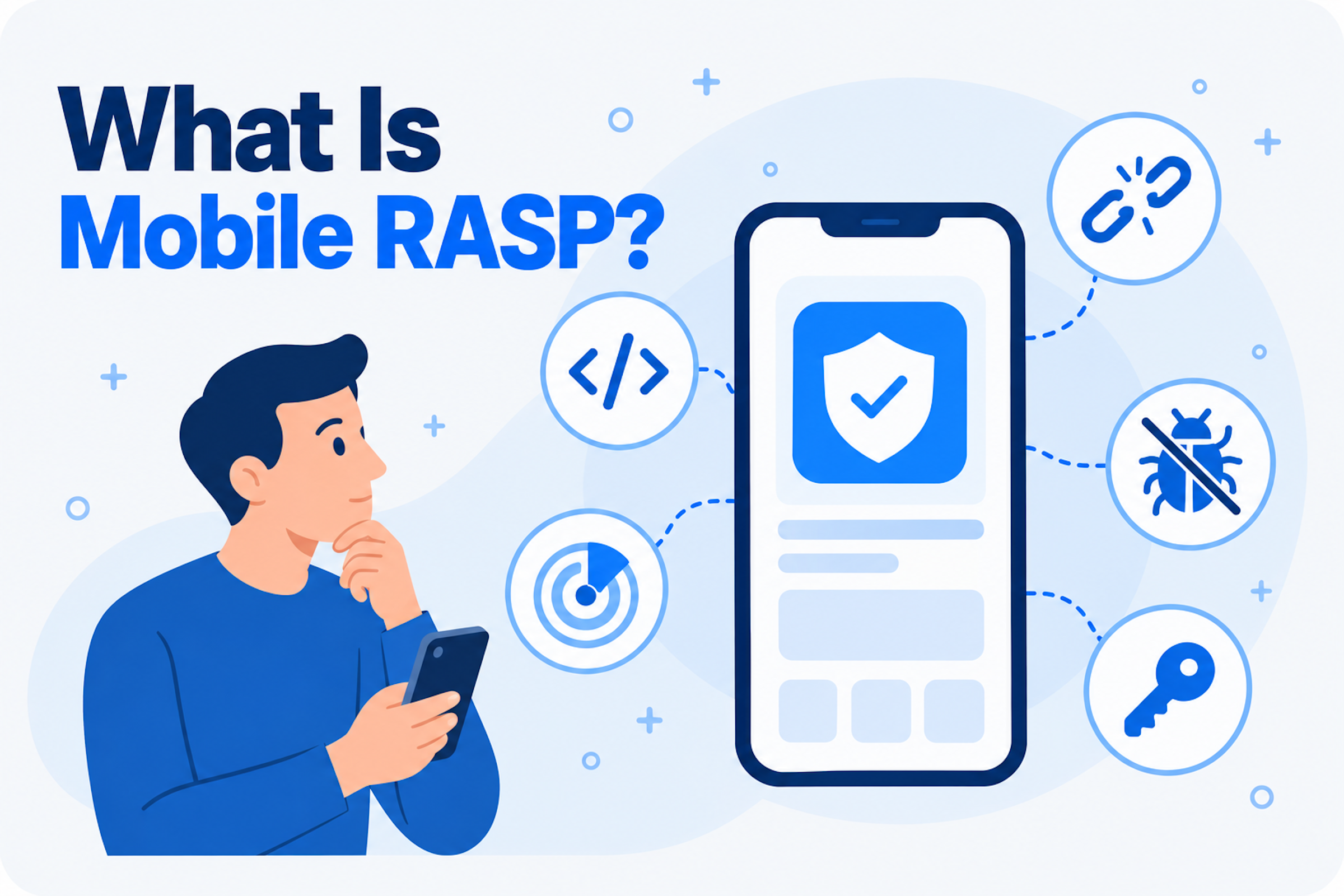
A mobile RASP solution typically combines several layers that work together:
- Code hardening and obfuscation.Makes the binary hard to read and reverse engineer. Dynamic obfuscation changes the protection over time, so an attacker's work on one version does not carry over cleanly.
- Anti-tampering.Detects when the app has been modified, repackaged or hooked, and responds before the modified code can do harm.
- Jailbreak and root detection.Identifies compromised devices where the operating system's own protections are switched off.
- Debugger, emulator and hooking detection.Spots the tools attackers use to inspect and change app behavior at runtime.
- Network protection.SSL pinning makes sure the app only talks to your real servers, which stops man-in-the-middle interception.
- Fraud signals.Scores sessions using device, network and behavior signals so suspicious users can be flagged to your fraud team.
Mobile RASP vs. Mobile Application Security Testing
The two are complementary, not alternatives. Mobile application security testing finds vulnerabilities in your app before release so developers can fix them. Mobile RASP protects the app after release, including during the window between a flaw being found and a fix reaching every user. A mobile fix is not live until it clears app store review and users update, so that window can be weeks.
A strong mobile security program uses both
Test every release, and protect the app at runtime while fixes ship.
How to Evaluate a Mobile RASP Solution
- Integration effort. How long does it take to embed, and does it need code changes in every release?
- Coverage. Does it cover iOS and Android, and frameworks such as Unity for games?
- Response options. Can it block an attack locally in the app, not just report it?
- Visibility. Does your team see what was detected, on which devices, and how often?
- Performance. Users should never notice it.
- Fit with testing. Does it connect to the tool that finds and fixes the underlying flaws?
How Data Theorem Mobile Protect Delivers Mobile RASP
Data Theorem Mobile Protect is a mobile RASP SDK for iOS and Android apps. It embeds in 2 to 4 hours and protects the app on every device it runs on:
- Data Theorem dynamic obfuscation and anti-tampering harden the app binary.
- Jailbreak and root detection, plus detection of debuggers, hooking and AI-assisted reverse engineering attempts, which are blocked locally in the app.
- SSL pinning built on TrustKit, Data Theorem's open source pinning library, with visibility into how often interception attempts happen.
- A third-party code firewall that controls what embedded SDKs can do.
- Anti-fraud session scoring that flags risky users, cloned apps and device farms to your team.
Mobile Protect pairs with Mobile Secure, which tests every iOS and Android release, so the flaws Mobile Protect defends against also get found and fixed in code.
Mobile ProtectA mobile RASP SDK for iOS and Android apps.Learn MoreRelated Data SheetMobile Protect Data SheetMobile Protect's in-app runtime defenses for deployed iOS and Android apps: dynamic obfuscation, anti-tampering and anti-debugging, jailbreak and root detection, on-device anti-fraud scoring (account takeover, payment fraud, bot and emulator defense, fraud farms), defense against AI-augmented attacks (attack-path mapping, memory scraping, AI overlay malware), and the SDK's production footprint (500 KB, no startup tax on Android, ~10 KiB/s telemetry).Read Now
Frequently Asked Questions
What Does RASP Stand For?
Runtime application self-protection: security built into an application that detects and responds to attacks while the application runs.
Is Mobile RASP the Same as App Shielding?
The terms overlap. App shielding usually describes hardening such as obfuscation and anti-tampering. Mobile RASP includes that hardening plus runtime detection and response.
Does Mobile RASP Replace Security Testing?
No. Testing finds and fixes flaws before release. RASP protects the app in production, including while fixes are on their way to users.
Does Mobile RASP Slow Down the App?
A well-built RASP SDK runs with no noticeable impact on the user experience.